
FTTH & PON
Drop and distribution patch cords using single-mode fiber, passive splitters and accessible termination points.
- Split ratio and ODN loss
- SC or LC connector type
- Subscriber connector condition
Connector type, fiber grade, polish, jacket and length change what a suitable patch cord looks like.
Use each profile as a starting point, then validate the actual connector, fiber grade, loss budget and mechanical protection.
Drop and distribution patch cords using single-mode fiber, passive splitters and accessible termination points.
High-density links with MPO and MTP trunks, LC patch cords and strict polarity control.
Access, aggregation and fronthaul links where reach, wavelength use and outdoor protection are central.
Structured cabling with LC or SC patch cords for switches, servers and patch panels.
Fiber chosen for heat, vibration, oil and electromagnetic immunity near plant and substations.
Exposed links that demand sealed connectors, water blocking and UV-resistant jackets.
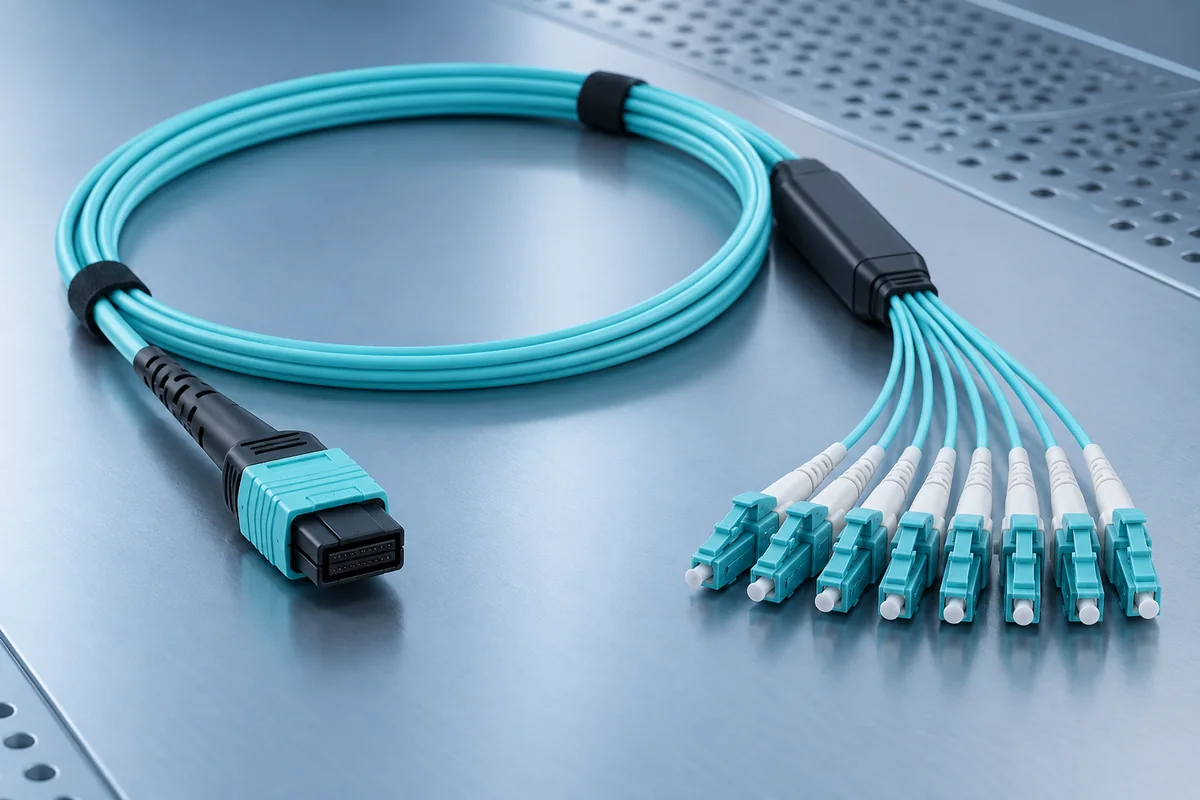
High-density assemblies can save space, but polarity, connector cleanliness and access become more important. Outdoor access networks may use fewer interface types yet demand better sealing, water blocking and route protection.
A useful patch cord specification answers these questions even when the environment changes.
Identify SC, LC, FC, ST, MPO or MTP, and choose single mode or multimode.
Record installed length, pathway limits, intermediate connections and environmental exposure.
Build a budget from specified values and reserve margin for aging, repair and measurement uncertainty.
Define inspection, continuity, polarity, insertion-loss and OTDR requirements before commissioning.
Connector type, fiber grade, polish, environment, length and loss target are the most useful first details.