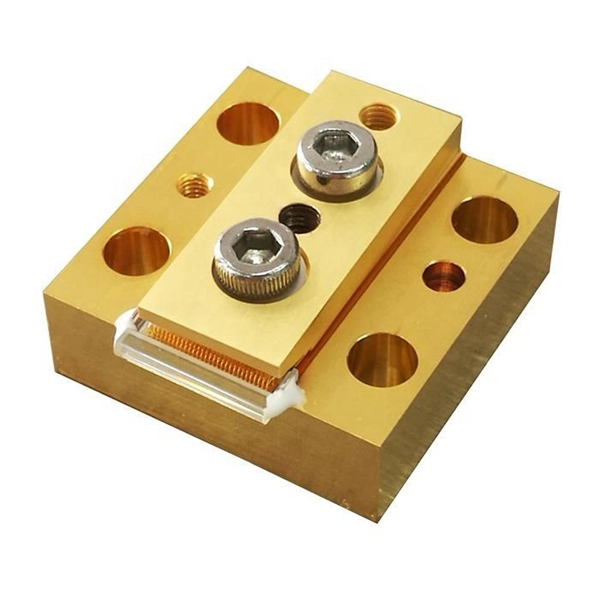
High-performance OTDR test modules for OEM use are designed for reliable operation in demanding environments, including high-temperature conditions, with modular, multi-wavelength, and bidirectional testing capabilities.
Overview of OTDR OEM Modules
OTDR (Optical Time-Domain Reflectometer) modules are essential for characterizing optical fibers, measuring attenuation, locating faults, and verifying fiber link quality. OEM OTDR modules are typically compact, modular, and designed for integration into handheld or automated test platforms, supporting single-mode and multi-mode fibers across multiple wavelengths (e.g., 1310 nm, 1550 nm, 1625 nm) for FTTx, PON, metro, and enterprise networks .
Key Features Relevant to High-Temperature Environments
Modular Design: Many OEM OTDR modules, such as the VIAVI 4100 Series and Dimension Technology modules, adopt a test module + universal platform architecture, allowing integration into ruggedized systems suitable for field deployment .
Multi-Wavelength and Multi-Core Testing: Modules support multiple wavelengths and can test multiple fibers simultaneously, improving efficiency and reducing exposure time in harsh environments .
Bidirectional and Automated Testing: Advanced modules, including FiberComplete PRO, perform automatic bidirectional OTDR measurements, insertion loss (IL), and optical return loss (ORL) analysis, ensuring accurate results even under variable temperature conditions .
Ruggedized and Field-Ready Construction: While specific high-temperature ratings are not always published, OEM OTDR modules are generally designed for robust field performance, including stable operation in outdoor and industrial environments, which implies tolerance to elevated temperatures .
Integrated Power Meter and Optical Source: Many modules combine OTDR, optical power meter, and light source in a single unit, reducing the need for additional equipment and minimizing thermal stress from multiple devices .
Considerations for High-Temperature OEM Applications
- Thermal Specifications: When selecting an OTDR module for high-temperature environments, check the manufacturer's datasheet for operating temperature range. Ruggedized OEM modules often support -10°C to 50°C or higher, with some industrial-grade units rated up to 60°C or more.
- Calibration Stability: High-temperature operation can affect light source stability and detector sensitivity. Choose modules with temperature-compensated light sources and high-precision optical power meters .
- Integration Flexibility: OEM modules should allow custom housing or thermal management solutions, such as heat sinks or ventilated enclosures, to maintain performance in extreme conditions.
Recommended OEM OTDR Modules
- Dimension Technology Multi-Core OTDR Modules: High precision, multi-function, and capable of simultaneous multi-fiber testing .
- VIAVI 4100 Series OTDR Modules: Modular, multi-wavelength, TrueBIDIR bidirectional testing, and automated reporting for field deployment .
- LaserComponents 4100 Series FiberComplete PRO Modules: Integrated OTDR, power meter, and optical source with automated pass/fail analysis, suitable for FTTx/PON networks .
- Fiberinthebox OEM Handheld OTDRs: Compact, stable, and user-friendly, designed for integration into custom OEM solutions .
Conclusion
For high-temperature OEM applications, select OTDR modules that are modular, ruggedized, and designed for field deployment, with integrated multi-wavelength and bidirectional testing capabilities. While exact temperature ratings should be confirmed with the manufacturer, the listed modules are widely used in demanding environments and can be adapted for high-temperature operation through proper thermal management and enclosure design .