JEWELBLU OPTICALFIBER PATCH CORDS Technical Inquiry

Optical cables can be considered as channels

Channels, such as those in Fibre Channel protocols, are logical data pathways that rely on optical cables as the physical medium to transmit high-speed digital information.Channels in Data Communication

A channel represents a logical path for data transfer between devices, such as servers and storage systems, within a network or storage area network (SAN) environment. In Fibre Channel (FC) systems, channels are used to manage data flow, error control, and signaling between nodes, ensuring reliable and low-latency communication . Channels can exist in different topologies, including point-to-point, arbitrated loop, and fabric, each defining how multiple devices share or access the communication path .

Optical Cables as Physical Media

Optical cables serve as the physical medium that carries the light signals representing digital data. They consist of optical fibers capable of transmitting high-speed signals over long distances with minimal loss and interference . Optical fibers are preferred for high-bandwidth applications because they support extremely high data rates, low latency, and immunity to electromagnetic interference .

How Channels and Optical Cables Interact

Channels are logical constructs, while optical cables are physical conduits. In practice:

  • A Fibre Channel link uses an optical cable to connect two ports, with the transmitter converting electrical signals into light and the receiver converting light back into electrical signals .
  • Each channel can carry multiple data streams, and in advanced systems, Wavelength Division Multiplexing (WDM) allows multiple optical channels to coexist on a single fiber, increasing capacity .
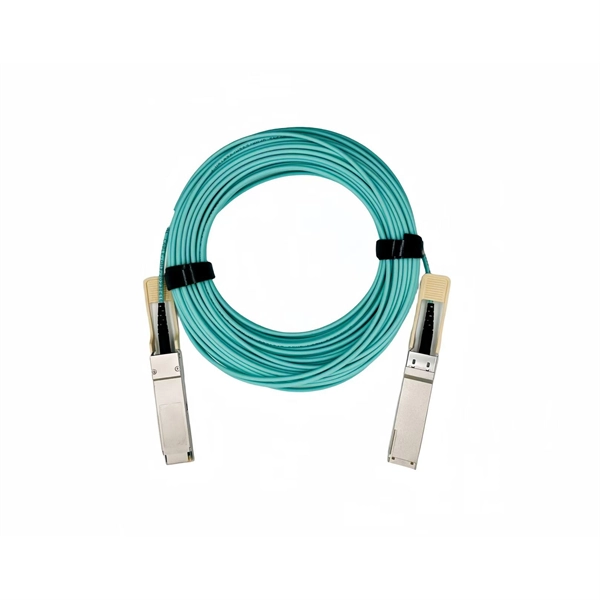
  • Optical cables can be used in active optical cables (AOC), where the transmitter and receiver are integrated with the fiber, simplifying deployment while maintaining channel integrity .
Practical Implications
  • High-speed SANs rely on optical cables to maintain the performance and reliability of channels, supporting data rates from 8 Gbps up to 64 Gbps or more .
  • Channels define the protocol and data handling, while optical cables determine the distance, bandwidth, and signal quality achievable.
  • Using optical cables allows channels to scale over longer distances than copper, enabling enterprise and data center networks to interconnect efficiently . In summary, channels define the logical flow of data, and optical cables provide the physical path for that data. The performance, reliability, and capacity of a channel are directly influenced by the characteristics of the optical cable used, making their relationship fundamental in high-speed communication systems.
Optical cables can be considered as channels

Fiber-optic communication

OverviewApplicationsBackgroundHistoryTechnologyParametersComparison with electrical transmissionGoverning standards

Optical fiber is used by telecommunications companies to transmit telephone signals, Internet communication and cable television signals. It is also used in other industries, including medical, defense, government, industrial and commercial. In addition to serving the purposes of telecommunications, it is used as light guides, for imaging tools, lasers, hydrophones for seismic waves, SONAR, and as sensors to measure pressure and temperature.

Related Video Reference

This video was associated with the source search result. Verify technical details against current product documentation and project requirements.

Technical note

This reference is intended for preliminary fiber optic patch cord research. Compatibility, link budgets, connector types, polish, installation methods, test limits and applicable standards must be verified for the specific project.

Still Have a Technical Question?

Use the inquiry form to describe a patch cord requirement, connector type or testing question.

Start an Inquiry